Opus 5.5 vs GPT-6: Anthropic regains the coding lead
In this article
After months of uneven results, Opus 5.5 puts Anthropic back in front. On our projects it beats GPT-6 Astra on code quality and makes subscription limits last longer. Sol and Luna remain useful for smaller tasks.
In our coding work, Opus 5.5 produces better patches than GPT-6 Astra and makes subscription limits last longer. Astra remains strong for complex tasks, while Sol and Luna suit smaller, well-defined work.
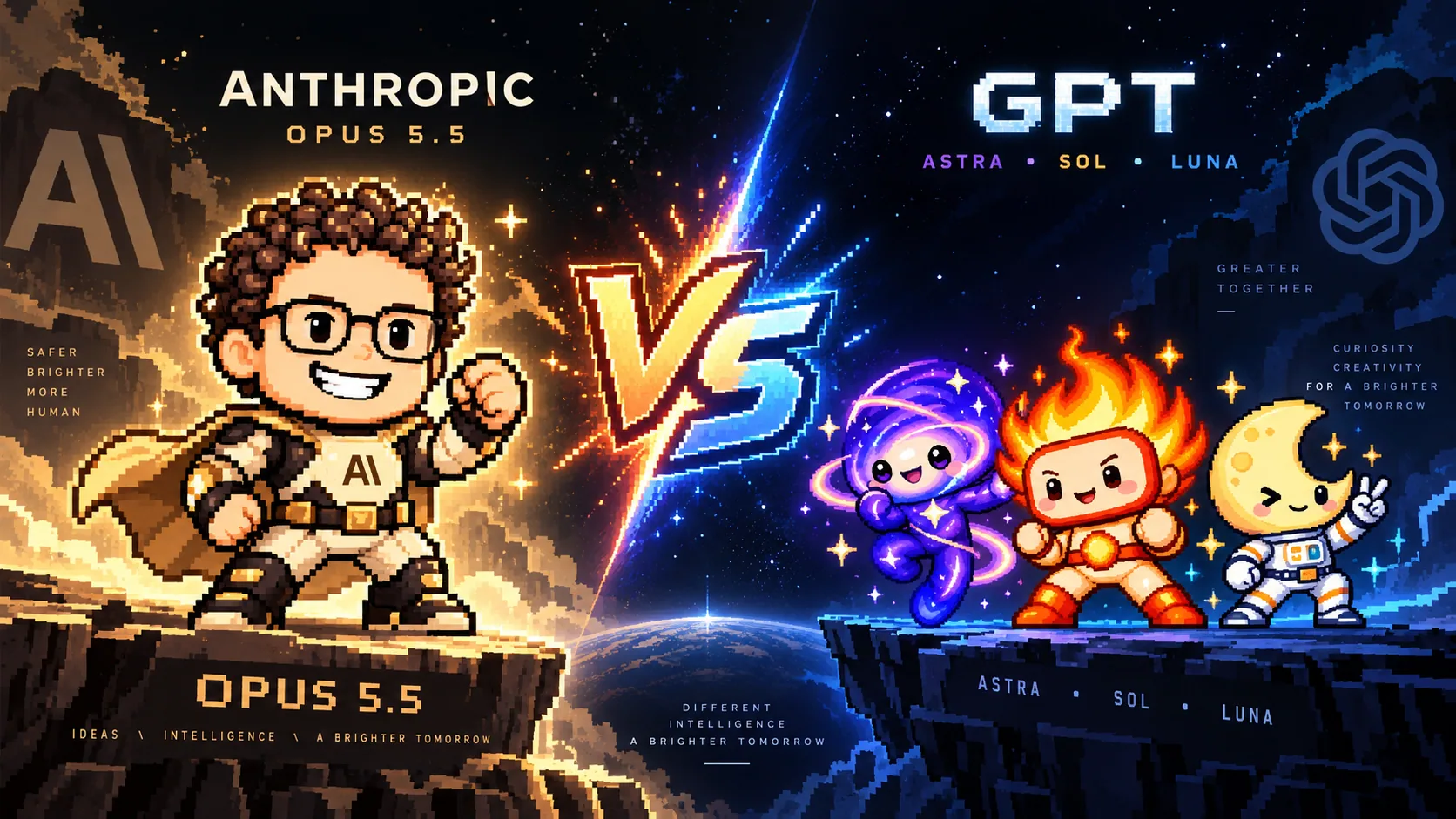
Within a single week, Claude Opus 5.5 arrived alongside the new GPT-6 Sol and Luna, joining Astra. We put them to work on our projects, and our verdict is clear: Opus 5.5 is the best model for coding right now. It writes better code than Astra, makes fewer mistakes and stretches subscription usage limits much further. That means more productive work on the same plan.
Anthropic is back on top for coding. OpenAI, meanwhile, has to contend with usage limits that run out too quickly.
Anthropic's comeback: from Opus 4.6 to 5.5
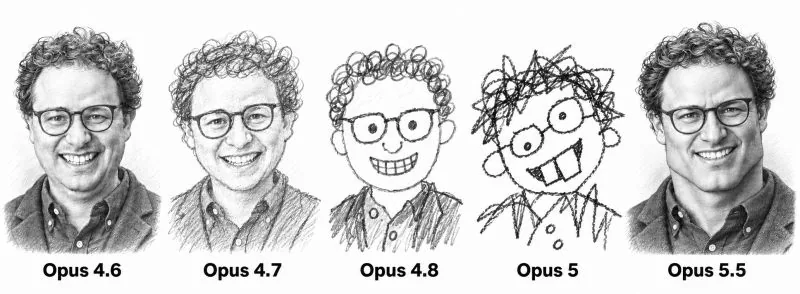
In February 2026, Opus 4.6 set the standard. Anthropic presented it as a step forward in debugging and code review, and developers using it every day saw the difference firsthand. It became the model to beat.
Then something changed. Across Opus 4.7, 4.8 and 5, coding quality slipped with each release in our experience: less decisive answers, patches that needed reworking and more rounds to reach an acceptable result. We saw it clearly in our own repositories.
Opus 5.5 closes that chapter. Its quality has returned to the level of Opus 4.6 and moved beyond it. It understands project context, handles ambiguous debugging and extensive refactors, and produces code that needs little intervention before it can be merged.
Opus 5.5 vs Astra: Opus wins
Our direct comparison with GPT-6 Astra, OpenAI's flagship model, leaves little doubt. On our tasks, Opus 5.5 reaches the right solution sooner, needs fewer corrections and finds more issues during code review.
Public benchmarks point in the same direction:
In the Artificial Analysis Coding Agent Index, Claude Code with Opus 5.5 scores 66, versus 62 for Codex with Astra.
On Terminal-Bench, Opus reaches 63% and Astra 56%.
In MacroscopeBench code review, Opus scores 82.3, versus 80.3 for Sol and 78.0 for Astra, and finds the most known bugs.
DeepSWE is the one test where Astra keeps pace: both models score 68%.
Usage limits: the gap is substantial
For anyone working on a subscription, the decisive question is how long the allowance lasts. An intensive day with Opus 5.5 in Claude Code does not exhaust our limits. With Astra in Codex on the Pro plan, the weekly allowance can disappear after just a few days of heavy work.
Sol and Luna have improved the situation because some work can move to the smaller models. But Astra remains too demanding: a complex session consumes a large share of the weekly budget.
Results relative to consumption settle the comparison for us. Opus 5.5 delivers better results while using much less of our subscription allowance in day-to-day work. For a team that codes every day, that means more useful hours for the same spend.
One important qualification for benchmark readers: in the Artificial Analysis test run through the API at maximum effort, Opus uses more tokens per task on average than Astra: 15.6 million versus 3.3 million. That is a laboratory test with effort turned all the way up. In our daily work, Opus reaches the right patch in fewer attempts, which is why our subscription limits last longer.
Sol and Luna: useful for smaller tasks
OpenAI has added two lighter, cheaper models alongside Astra.
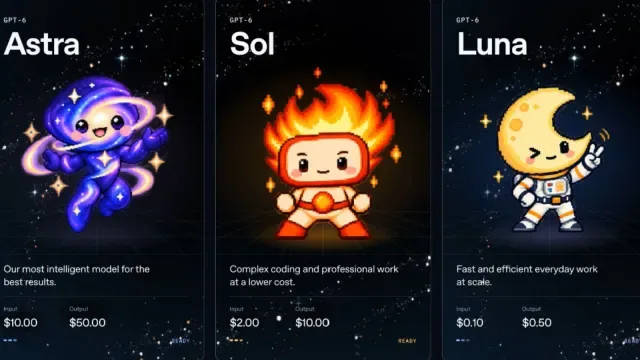
GPT-6 Sol costs $2 per million input tokens and $10 per million output tokens, one fifth of Astra's rates. The problem is that, compared with Sol from the 5.6 generation, it feels like a step backward in our work: less precise and more likely to misread a request. It remains useful for everyday development with clear, well-scoped requirements, and it holds its own in code review.
GPT-6 Luna costs just $0.10 per million input tokens and $0.50 per million output tokens. It scores only 15% on Terminal-Bench, so it is not a serious choice for substantial refactoring or debugging. For small, repetitive tasks such as classifying issues, writing simple tests or making mechanical changes, however, its price is hard to beat.
In short, Sol and Luna are useful tools for straightforward tasks. Difficult coding work is a different contest.
Which model should you choose?
If you need to... | Choose | Why |
|---|---|---|
Handle complex debugging, extensive refactors or critical code reviews | Opus 5.5 | The strongest coding quality today, with usage limits that last |
Work on complex tasks within the OpenAI ecosystem | Astra | Strong quality, but watch your weekly limits |
Do everyday development with clear requirements | Sol | Affordable, though less impressive than the previous generation |
Run simple, repetitive tasks that can be checked automatically | Luna | Extremely low cost |
Our recommendation is simple: choose Opus 5.5 for coding that matters most, and use Sol and Luna to lighten the routine workload.
Anthropic lost the lead for a few months. With Opus 5.5, it has reclaimed it by putting code quality first.
Key takeaways
- Opus 5.5 is our top choice for coding: it beats Astra on code quality in our projects and leads the cited benchmarks.
- After a decline in our experience with Opus 4.7, 4.8 and 5, version 5.5 brings Anthropic back to the level of Opus 4.6 and beyond.
- With Astra on the Pro plan, our weekly limits run out too quickly; Opus 5.5 lets us get much more work done.
- GPT-6 Sol feels less precise than Sol 5.6 in our work; Sol and Luna are best suited to smaller, simpler tasks.
Frequently asked questions
Is Opus 5.5 better than GPT-6 Astra for coding?
Yes. On our projects it produces better code with fewer corrections. The cited benchmarks point in the same direction: 66 versus 62 in the Artificial Analysis Coding Agent Index and 63% versus 56% on Terminal-Bench.
Which model makes subscription limits last longer?
Opus 5.5, in our experience. With Astra on the Codex Pro plan, our weekly limits can run out after a few days of intensive work. Opus reaches the right patch in fewer attempts, so its allowance lasts much longer in our daily use.
Is GPT-6 Sol better than the previous Sol?
No. In our daily work, GPT-6 Sol is less precise than Sol 5.6 and more likely to misunderstand a request. Its lower price still makes it useful for clear, well-scoped development tasks, and it performs reasonably well in code review.
When should I use GPT-6 Luna?
Use Luna for small, high-volume tasks that are easy to verify, such as classifying issues, writing simple tests or applying mechanical changes. At $0.10 per million input tokens and $0.50 per million output tokens, it is inexpensive, but it is not a good choice for serious debugging or refactoring.
Sources
- Anthropic, Claude Opus 4.6 announcement
- Anthropic, Claude Platform release notes
- Anthropic, Claude Opus 5.5 documentation
- OpenAI, API pricing
- OpenAI, GPT-6 Astra documentation
- OpenAI, GPT-6 Sol documentation
- OpenAI, GPT-6 Luna documentation
- OpenAI, GPT-6 Sol and Luna announcement
- Artificial Analysis, Claude Code vs Codex
- Macroscope, code review benchmark